Goodnight, Raleigh! - a look at the art, architecture, history, and people of the city at night

Time Traveling to the Thrifty Food Market

Mr. and Mrs. Thomas stand in front of their grocery store, The Thrifty Food Market, in 1972.

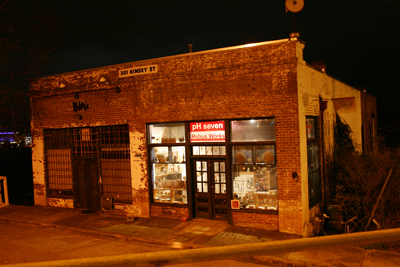
A few weeks ago I attended a First Friday event at Rebus Works, a small art gallery in Boylan Heights. As I walked through the crowded room inspecting the artwork, glass of wine in hand, my footsteps across the creaky, worn wood floors started to echo in my ears. The chit-chat of the crowd seemed to fade away, and my mind began to drift back to a time that existed more than 35 years ago when the gallery space was occupied by a neighborhood grocery called The Thrifty Food Market. It was a simpler, different sort of time.

Mr. and Mrs. Thomas had owned and operated the little grocery store at the western terminus of the Martin St. viaduct since 1937. I lived in Boylan Heights for several years in the early 1970s and got to know the Thomases well. They were a kindly older couple whom I always thought of back then as the grandparents of Boylan Heights. In those days I lived with a group of friends in a house that many of our neighbors regarded with disdain as a “hippie house.” But not the Thomases. They took a liking to us, — well, actually, there was no one they didn’t like — and we certainly liked them.
Read more »

Raleigh’s Own Castle

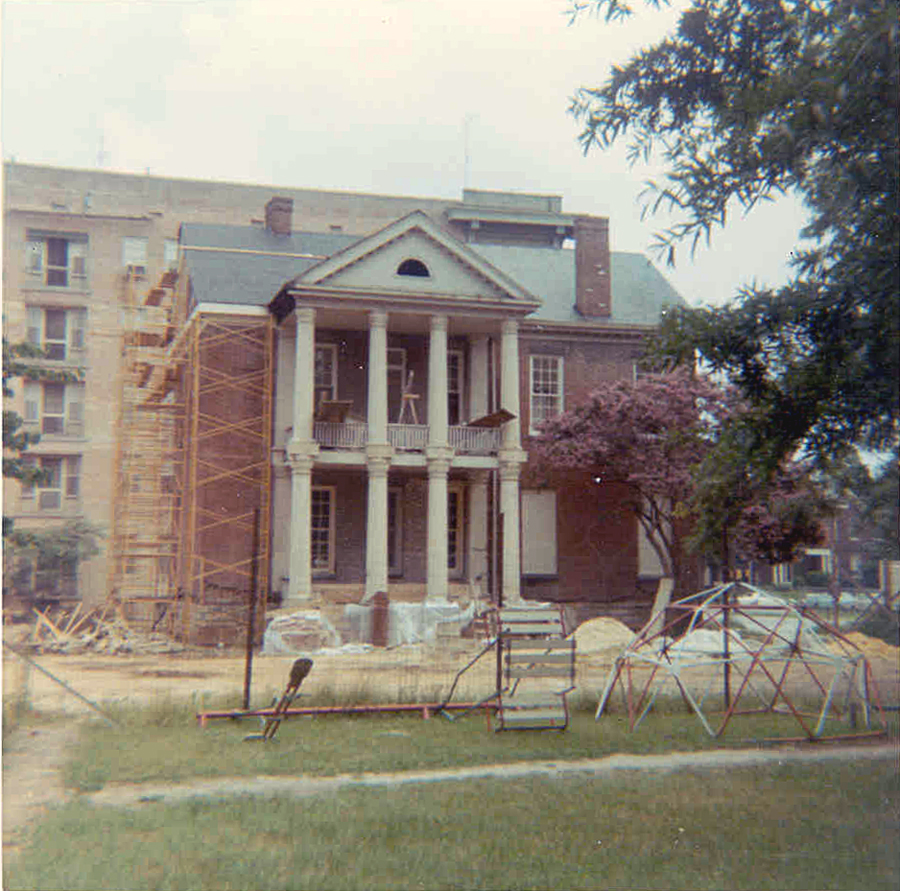
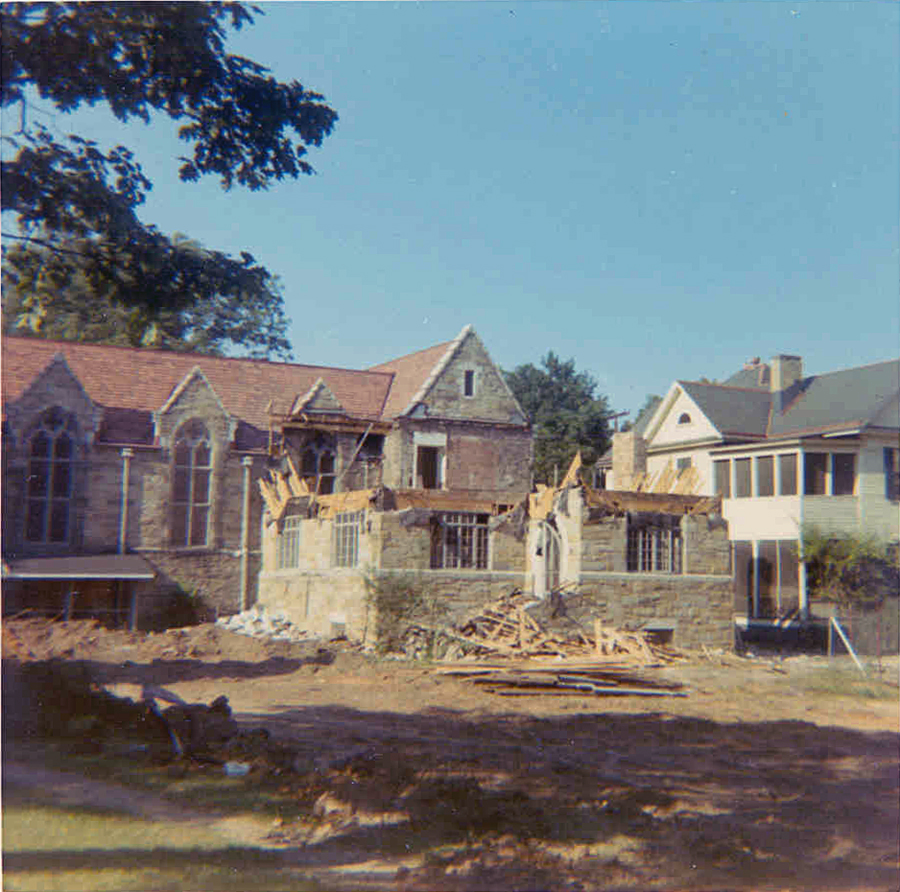
Remembering the Old Meredith Building

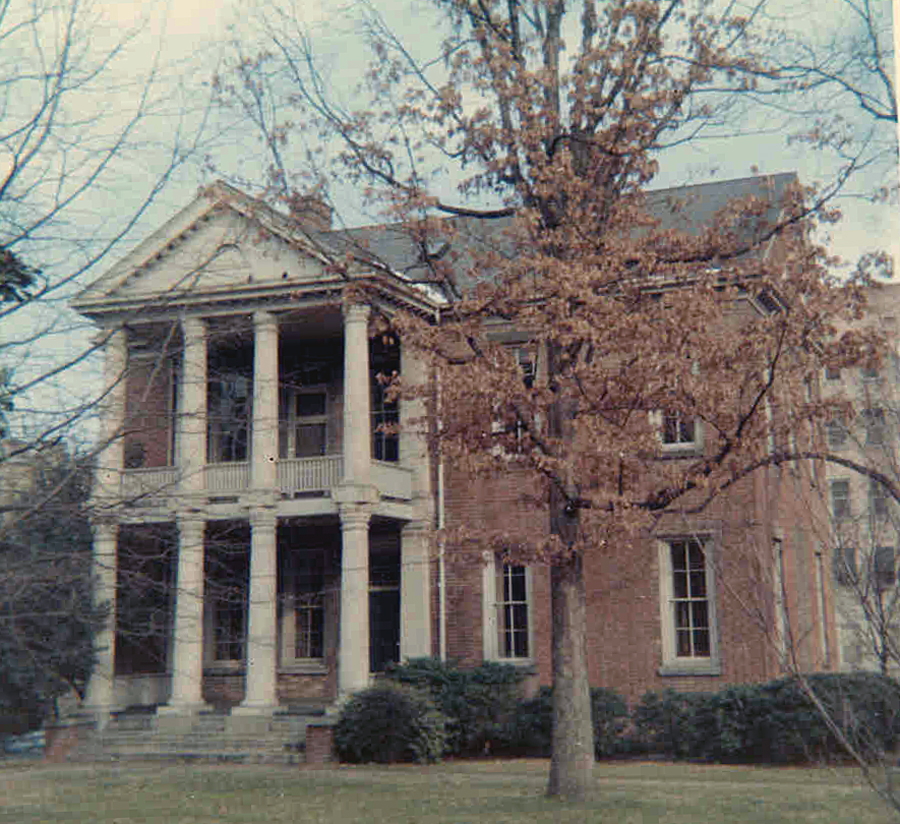
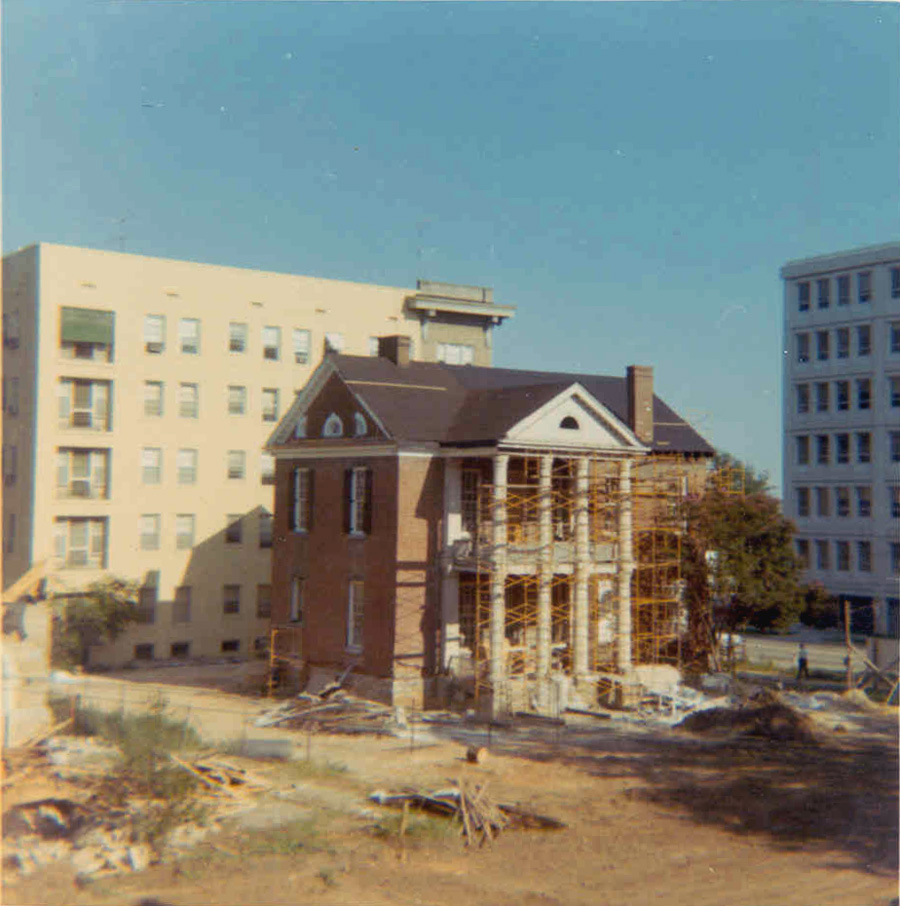
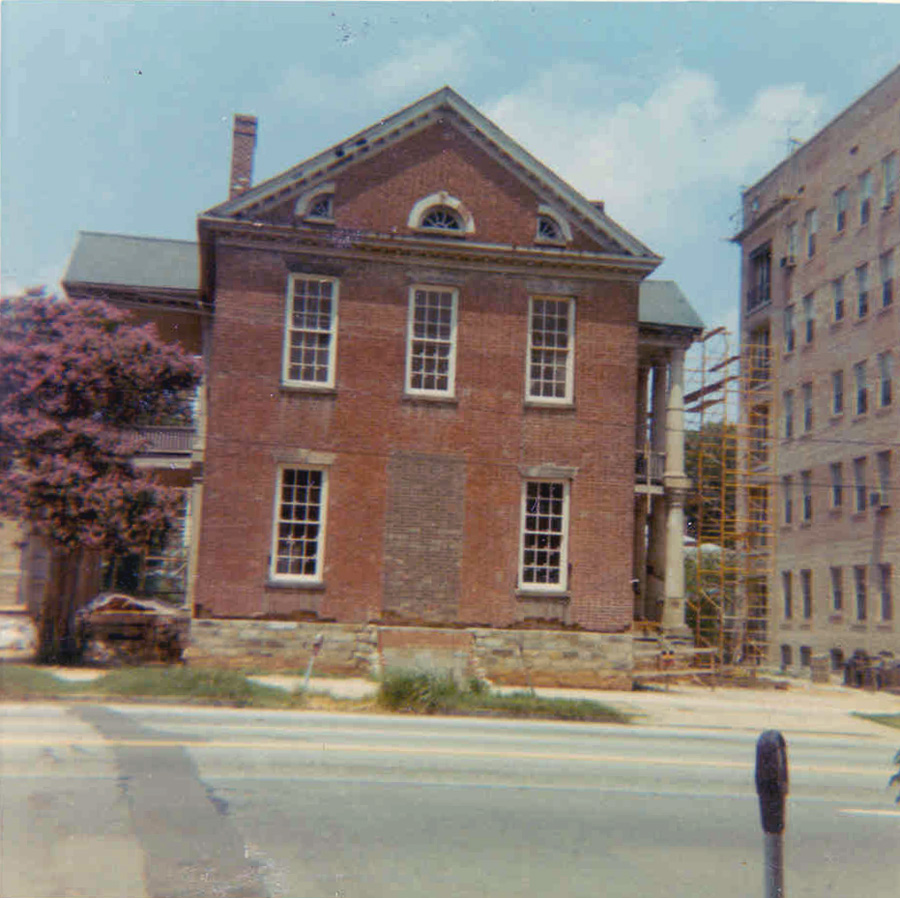
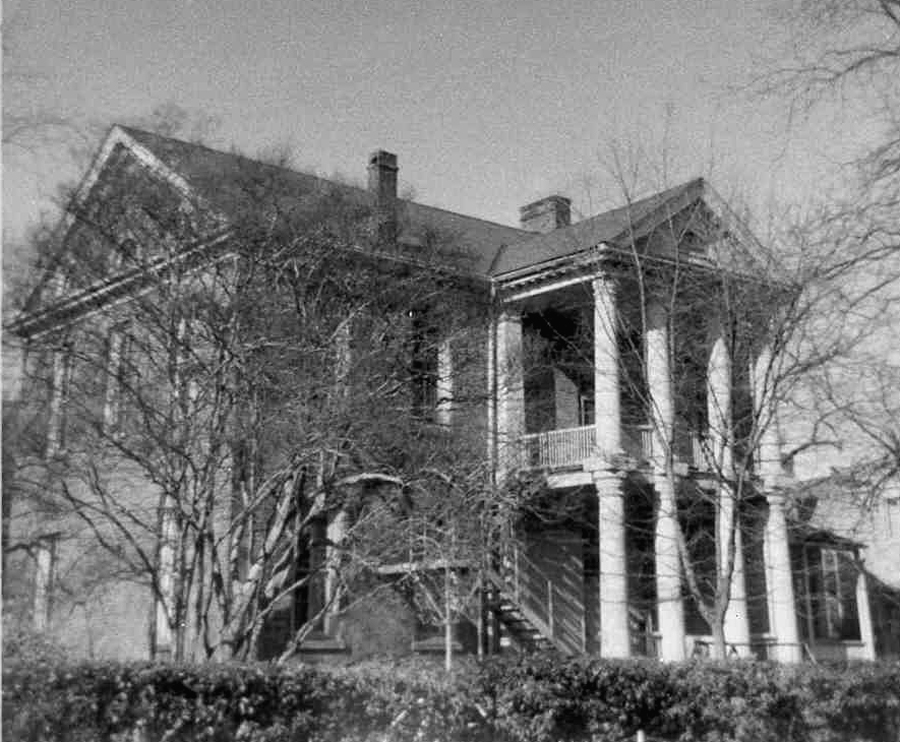
Located across Blount Street from the historic Richard B. Haywood house is a sprawling, 4-acre state government surface parking lot. I can tell you, though, one of Raleigh’s most exuberant and impressive 19th century structures once occupied this site. I am speaking of course, of the main building of the erstwhile Baptist Female University, now known as Meredith College. The four-story, many-gabled and turreted, solid brick Chatauesque, Queen Anne-styled building was designed by Raleigh’s enigmatic 19th century architect Adolphus Gustavus Bauer. After its completion in 1899, Meredith College occupied this site for the next quarter century. Over this time the College added 4-story Faircloth Hall, and annexed four adjacent residences to accommodate the growth of its student body. Even so, the 1899 main building itself continued to preside majestically over the 100 block of North Blount Street.
Read more »

A Ghost of Christmas Past

Photographing Raleigh’s Fayetteville St. Christmas Decorations

Holiday decorations on Fayetteville Street, Christmas 1965

A few nights ago John Morris and I visited Fayetteville St. and were bedazzled by the glittering Christmas lights lining the street. I reminisced with John about the annual Raleigh Christmas parade which was held at night back in the 1960s (rather than on Saturday morning as it is now). My family would all head downtown for that event, and while Mom went shopping, Dad took my brothers and me to watch the parade. We always staked out the corner at the Olivia Raney Library and Capitol Square. From that vantage point we could enjoy the parade as it made  its way up Hillsboro St., passed in front of the library before heading around the Square and then down Fayetteville St. Afterwards, we would walk down Fayetteville St. to meet up with Mom. I remember being awestruck by the shimmering spectacle of the thousands of colored Christmas lights.

I related to John how I attempted back in 1965 to photograph the view down Fayetteville St. of the Christmas decorations at night. I found, however, that to my dismay, trying to capture all the colored lights on film was beyond the scope of my Kodak Instamatic camera. Ultimately, the photograph ended up among the shuffle of the hundreds of photos I cranked out with my Instamatic back then. I only just recently ran across it again after all these years.

Read more »

Denizens of the Coal Yard

Not long ago I wrote about the Boylan wye, and described what remains of that former downtown train switchyard and industrial district. Its most prominent relic can be easily seen from the Boylan Ave bridge: a rusted cement hopper towering over the site. But virtually invisible to most observers today is the weed-choked and debris-strewn sunken area that is the footprint of the former Smith Coal and Oil Co. coal yard.

This is a view of a portion of the Boylan wye from the bridge in 1970. The concrete plant is on the left and the coal yard is just right of center, below the two box cars. The present-day photo at the top shows the tracks the boxcars were parked on in 1970. The remnants of the coal yard are just to the right of these tracks.

Read more »

Stay Connected

Discuss Raleigh

  • Recent Comments:

    • PullenFan: Sounds great I look forward to it. Hopefully we can do it after the snakes have gone underground!
    • mp: Are the printing machines still visible from the street? I took my son downtown at 10:30 one night in the...
    • anonymous: i interviewed for a job in the bath building nearly 20 years ago. the job was nice, the potential...
    • Chris M.: Just noticed this post–I actually worked in Park Shops for a few months after the renovations were...
    • Raleigh Boy: To Pullen Fan and others interested in visiting the Water Garden site — I am working with the...
    • PullenFan: Did the visit to the Water Garden ever get set up? I was hoping to tour it and possibly save some plants...
    • Devin: Say what you want about Brutalism, but at least it’s an ethos, Dude. I agree with Sid 100%, at least...
  • Contributors

    Media and Friends